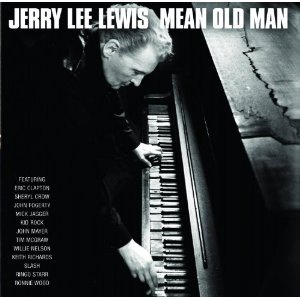
Jerry Lee Lewis, Mean Old Man

September 14th, 2010

Artist: Jerry Lee Lewis
Title: Mean Old Man (Deluxe Edition)
Label: Verve/Forecast B001-4675
Release Date: September 7, 2010
Genre: Rock, Country

“Got to scrape the shine right off your shoes,” sings Jerry Lee, backed by Keith Richards from the Stones number, “Sweet Virginia.” Jerry Lee, you might as well say “shit,” like it was done in the original version. You ain’t fooling me. You may be too late for the redemption bandwagon.

Mean Old Man is the follow up to 2006’s special guest-packed, Last Man Standing, with many of the same artists returning. Mean Old Man isn’t the rocker the Last Man was, but that’s all right. With Lewis’ vocal range becoming more narrow and less fortified, the country songs bring out the nuances of his delivery.

One thing that isn’t suffering is Jerry Lee’s piano playing. It is still signature Killer keys, not as pounding as it used to be, but the rhythm still pumps. You can witness it on the cover of Chuck Berry’s “Roll Over Beethoven.” Lewis shows he’s still not ready to roll over and play dead. He may be an old dog, turning 75 at the end of September, but he can still provide us with a few tricks.

“You Can Have Her,” rocks hard too, featuring Eric Clapton James, Burton and three other guitarists. Yes, five guitarists. With Clapton and Burton and their reputations, I can’t imagine why five guitars are necessary. This isn’t the Wall of Sound.

Kid Rock’s contributions on “Rockin’ My Life Away” are a cloud on an uncloudy day.  As much as he would like to think he’s got an attitude similar to the Killer, Jerry Lee’s got more evil in his pinky that tickles that eighty-eighth key than Kid Rock has in himself and his entire entourage.

The two country numbers backed by Gillian Welch shine brighter than any of the rock offerings. The two standards, “Please Release Me” and “I Really Don’t Want To Know,” sound like they’re handled with care. Even though they are standards that have been covered numerous times – even more than once by Jerry Lee – their harmonies still pack some emotion.

Kris Kristofferson’s “Sunday Morning Coming Down” provides the best soundtrack for Jerry Lee. The Killer sounds reflective and weary when interpreting the song. It the most personal reading you’ll hear on the disc.

The other songs that work best on the disc are contrary to the title, Mean Old Man. The two gospel songs, “Railroad To Heaven” and “Will The Circle Be Unbroken” get support from Solomon Burke & Mavis Staples, respectively. I don’t know how many times Mavis as recorded “Circle,” but every time she does, she delivers.

The album finishes with Lewis, solo at the piano, singing “Miss The Mississippi And You.” The track was recorded at Philips Recording Studio, Memphis, Tennessee. Jerry Lee even attempts a bit of the old country yodel, which he doesn’t quite pull off, but that’s okay. The sentiment is there.

The songs that work best here are not reflective of the title, Mean Old Man. The gospel tunes and country ballads make this disc worthwhile. It’s Jerry Lee’s personal conviction behind those songs. Maybe I should have taken it to heart that the Killer didn’t want to sing the word “Shit.” I still don’t believe in a kinder, gentler, Jerry Lee Lewis, but I do believe the man is aware of his legend and legacy.

Many proven songs and artists, but all that talent just doesn’t add up.
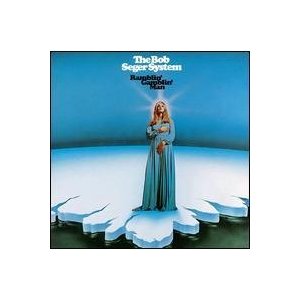
Songs I Turned Up: Ramblin’ Gamblin’ Man – The Bob Seger System

September 12th, 2010

Admittedly, I am not a big Bob Seger fan. I’ll also confess, I’ve seen him live twice. Once by accident, and once as a high school senior on the “Against the Wind” tour. Most recently I saw him in New York City when I received a free ticket to see the David Letterman program in 2006. Mr. Seger was the musical guest, supporting his “Face The Promise” album.
“Ramblin’ Gamblin’ Man” came off his Capitol debut of the same name, an album I do not own but will purchase someday at a garage sale for twenty-five cents. It’s a Detroit rocker, something Mitch Ryder could’ve easily pulled off, with lyrics of personal legend, something that Wilson Pickett was phenomenal at purveying. Seger runs through it like a freight train, with the organ pumping, never losing his breath, just pounding out smokin’ rock and roll.

Because of Seger’s slide into mainstream classic rock in the 70s and 80s, the song is overlooked and under appreciated. If you look at it as a Top Twenty single from 1968, I’ll take it over “Lady Willpower” by Gary Puckett & the Union Gap any day. In fact, I’ll think it would slide nicely between a couple of its contemporaries, “Baby, Now That I Found You” by the Foundations and “Cry Like A Baby” by the Box Tops.

I heard the song at about 11:00 am on a Sunday, Sept 12, while baking oatmeal cookies. (I was baking with attitude). I had just turned off a rebroadcast of American Top 40 from 1974. The number one hit, for the third consecutive week was Paul Anka’s “You’re Having My Baby.” No wonder Seger sounded so great.

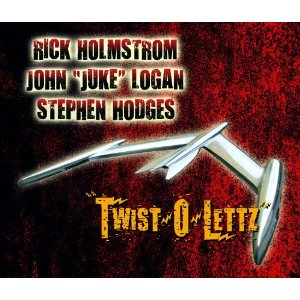
Brave New Blues? Twist-O-Lettz

September 11th, 2010

Artists: Rick Holmstrom, Juke Logan & Stephen Hodges
Title: Twist-O-Lettz
Label: Mocombo
Released: August 17, 2010
Genre: Roots Rock; Blues

The back cover of this album promises a record that is “sending the blues & other like-minded music through other-worldly filters…resulting in something reverently irreverent, respectfully reckless, ruthlessly relentless, heretofore unencountered & stranger than fiction…” So, does Twist-O-Lettz deliver on this brazen bit of braggadocio? In large part yes, though there are disappointments along the way.

The components of Twist-O-Lettz are guitarist Rick Holmstrom, drummer Stephen Hodges and harpman John “Juke” Logan, all three veterans of the Southern California blues and roots rock scene. Holmstrom has worked with harp-players William Clarke and Rod Piazza, among many others, as well as making solo records. In 2002, he released a less than universally admired album, Hydraulic Groove, which prominently featured samples and drum loops. Logan is known for his work with, among others, Ry Cooder. Hodges’ work has gone from drumming for James Harman’s powerhouse late 80’s blues band of the Dangerous Gentlemens era to playing on multiple albums by Tom Waits. As can be readily gleaned from these resumes, all three are accustomed to working inside and outside a pure blues context.

Twist-O-Lettz is by no means a purist’s blues album. Rather, it is a stripped down, electrified roots rock record that howls and snarls its way from the opening invitation to “The Land of a Thousand Dances” to its closing declaration of independence (from conventional – commercial? – music tastes), “Ways Of Action.” Recorded live in the studio exclusively by Holmstrom, Logan and Hodges, the album is driven by drums and guitar. Logan plays harp only as a solo instrument. There is no bass. No keyboards. No additional guitars. Holmstrom’s guitar, however, is run through a multitude of effects, drenched in reverb, tremolo and “space echo.” The ever-inventive Hodges fills out the sound with an ample percussive palate from sometimes playing “voodoo drums,” to at other times producing a hoof-like clop-clop. The result is at once starkly simple and aurally arresting. Often it feels like the swampy sound of Excello records on steroids. And married to the driving rhythms of the Fat Possum school of primal blues. Guitar solos, at least of the single string variety, are at a minimum, as Holmstrom sticks to riffing his way through the instrumental bits (check, especially, his Chuck Berry cum Keith Richards turn on the Jerry McCain-penned number, :Turn Yer Damper Down”). Logan picks his spots for harp solos, entering the fray at opportune moment s (such as his fine Little Walter-inspired solo on his self-penned “Lone Wolf”).

So what’s not to like? Actually, the closer the group hews to more traditional blues fare, the less interesting things get. I suppose it’s a natural for John “Juke” Logan to cover Little Walter’s signature song, but “Jukestaposition” seems relatively lifeless in the company of its sibling tracks on this album (and, by the way, what’s up with failing to give Walter Jacobs at least a partial song-writing credit in the liner notes?). Same with Elmore James’s “Wild About You.”
tramadols
cheap tramadol to buy

This album really clicks when, as promised, it ventures into stranger territory, for example the effects-laden re-working of New Orleans song-writing icon Chris Kenner’s “Land of a Thousand Dances.” Before getting to the familiar role-call of dance moves, we’re treated to an invocation courtesy of the African American spiritual, typically heard at Christmastime, “Children Go Where I Send Thee.” Weird, but affecting. Also inhabiting this terrain is Logan’s “Lone Wolf,” with its nasty guitar and rejectionist lyric: “I may be lonesome, but lonesome is cool.” Logan again contributes with the more up-tempo “We Got ‘Ta Rock,” propelled by Holmstrom’s gritty rhythm playing and Hodges’ relentless cymbal-free pounding. Logan’s urgent harp solo here is riveting. Holmstrom’s country-tinged “Look Me In the Eye” also works, with guitar playing so choked and rhythmic that chords become irrelevant (and indecipherable!). At the end of the song, Holmstrom exclaims, as only a transplant to Southern California can, “Take off those sunglasses and look me in the eyes!” The finale, “Ways of Action,” is an extended (7:04) tour de force and recapitulation of the sonic mayhem that has come before. The band, having set forth its musical vision, declares: “You try to tell me how the music should go/Look North, look South/Look at your back before you run your mouth.”
buy tramadols
purchase cialis
Despite its flaws, Twist-O-Lettz’s head-long pursuit of a roots-oriented yet original soundscape is clearly reward enough for taking this ride.
tramadols

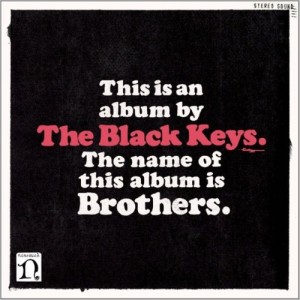
Black Keys, Brothers

September 10th, 2010

Artist: The Black Keys
Title: Brothers
Label: Nonesuch 520266
Released: May 18, 2010
Genre: Rock

Like long-time music producer Jerry Wexler used to do, the Black Keys went to Muscle Shoals to record a good portion of their third Nonesuch Records release, Brothers. That seemed to be a viable solution for Wexler. It’s been two years since the Danger Mouse produced Attack & Release, and since then, the Keys spent some time away from their parent project, with drummer Patrick Carney playing bass with a band called Drummer and Dan Auerbach releasing a solo album, Keep It Hid. Somewhere in there, they also had time to work on the Damon Dash produced Blakroc rap-rock collaboration.

My fear for this release was two-fold; first I thought it might never happen, thinking the band broke up. Second, I was afraid the reunion would not be fruitful, and just a walk-through of their past formulas.

I have little faith in fellow man. But I now have more faith in art. So, my apologies go out to Mr. Carney and Auerbach. This album shows no signs resting on their laurels, weariness or lack of creative spirit.

The album leads off with, “Everlasting Light,” somewhat of an anomaly on the record since it leads more toward glamour of T. Rex rather than the fertile black soil from which they usually dig. Plus, Auerbach has found his falsetto, a tool he also uses on the track “The Only One.”

“The Only One,” is a 70s string section away from being a Hot Chocolate cover. Auerbach’s voice almost reaches that register again on his cover of Jerry Butler’s “Never Gonna Give You Up.” Complete with glockenspiel, some fantastic fuzzy fills and light strings in the back – I’m thinking they’re synth-derived – it’s a lesson learned from their association with Danger Mouse.

With Danger Mouse they learned an overdub or two is allowed in the studio. Just because they’re a duo, doesn’t mean they have to be limited to two instruments. Auerbach learned that too from being on the road for his solo tour, being back by a truly underrated band, Hacienda. If the sound is attainable, go for it.

Danger Mouse does make an appearance on the disc, producing the lead single, “Tighten Up.” Starting with r&b bass line followed by whistling, the song turns into a pursuit of love and its aches and pains. The number opts for a guitar riff instead of a chorus, a bit of a twist for a number intended to be a single.

Another proof of the Danger Mouse influence is heard in “Ten Cent Pistol.” Not quite the spaghetti-western guitar sound heard on Attack & Release, but it does sound like a song that was intended for the devil-child of Marty Robbins.

The implementation of the harpsichord on “Too Afraid To Love You,” shows a maturity of experimentation brought upon by the two-year hiatus of the Keys. Once again, venturing into areas that were once probably only thought of.

On the other hand, there is no mistake that this is a Black Keys record. It is aptly titled Brothers with its genealogy shining through. You separate the brothers for a couple of years and they come back with experiences that need to be shared. And if you need a little more inspiration, send them to Muscle Shoals.

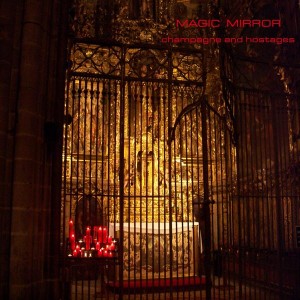
Magic Mirror, Champagne & Hostages

September 8th, 2010

Magic Mirror – Champagne & Hostages
Genre: Rock

The Litany:

I like a few of the songs, but this style of music really is not my bag. So my final grade on this may seem a little harsh. The band sounds like they know their way around the studio except when it comes to mixing in the vocals. I like the whole sound of the floating guitars but the voice made me not care because it sounded like he didn’t care. I felt the same way about the Smiths, I loved the music but I thought Morrissey needed a swift kick in the ass (and I know that’s not a popular opinion). But at least Morrissey had some drama.

Song by song summary:

Track 1: Starts off with a riff similar to “Hocus Pocus” by Focus. I’m expecting something more on the metal side of things but the vocals are droning, like an apathetic 80’s wash of production. The chorus provides energy as the song slips into a Television-type guitar riff. I can’t understand a word they’re singing on iTunes, my iPod or my stereo.

Track 2: I’m assuming this track is called, “You’ll Never Be Free.” The production is cleaner. I can understand the lyrics. It’s a nice bouncy break-up song. But once again, the vocal delivery sounds rather lazy and I don’t think the singer really cares if he’s jilted. So why should I?

Track 3: Really nice guitar intro, like it’s played through a chorus effect. The pace of the song matches the vocal delivery much better. It’s damn near a modern folk song.

Track 4: There’s some very trippy fader production and feedback in the intro and then it lapses to a derivative late 80s early 90s rhythm pattern used by shoe gazers. Again, there’s that big splashing wave of production, reminiscent of the Kitchens of Distinction, but heavier on the keys. If I would have seen this band in the 7th Street Entry in 1988, I would have thought highly of them. Right now, it sounds a little dated.

Track 5: This sounds like the Electric Prunes became zombies. And I don’t mean Rod Argent & Colin Blunstone.

Track 6: Very close to a reworking of “A Cowboy’s Lament.” Maybe if the effects were stripped off the vocals I’d like the voice better. I’m definitely having trouble with the vocals. It’s like a lazy-reverbed Nick Cave, with a cold, a half an octave higher with a little less octane.

Track 7: The intro slides into a very Harrison-like territory. And it sounds like there’s an addition of a female backing vocal. This is highly welcomed but it almost sounds if she has replaced the slide guitar.

Track 8: Another song that strips away the big production and the song sounds more like a modern folk song. The melody becomes more simplistic and the voice sounds more vulnerable. It’s my favorite song on the album so far. I’m guessing it’s called, “Never Gonna Die.”

Track 9: I’d like this song better if David Gedge sang it.

Track 10: All I can think of now is replacing the vocalist. I really like the instrumentation of these numbers. The big production doesn’t bother me. Melodically, a little of the hazy-floating side, but it’s pretty accessible. I want Chrissie Hynde to cover this one. Her voice would cut through the production instead become part of it. I thicker voice over this production would benefit the album.

Track 11: “I Love My Evil Country;” This should be the last song on the album. Even though I’m not one hundred percent sure of what I just aurally witnessed, this song seems to sum of the sentiments. It starts with the sparse production and goes big, like a traditional finale. Instead, well, read below.

Track 12: Incessant noodling, backward masking and self-indulgence isn’t a nice way to say goodbye.

Grade: C+

NOW THAT I KNOW WHO IT IS:
order tramadol
tramadol for sale
www.tramadolplus.net
my-tramadol.com
buyprovigilmodafinil.com

Well, it really doesn’t change my opinion. I checked out their MySpace page and read some of the posted reviews. The biggest difference was my confusion for “apathy” with “dry.” Track 3, 8 and 11 would be welcome on a mix along side their influences. But that’s three tracks out of twelve. In baseball, that’s a .250 average, which is a little below the “average average.” And I gave them a C+, which is a little above average. If you make the hits count, then it’s worthy of more praise, in both scenarios.


Enslaved By Budos

August 18th, 2010

Artist: The Budos Band
Title: Budos Band III
Label: Daptone -DAP020
Release Date: August 10, 2010
Genre: Afro Beat; Funk & Soul

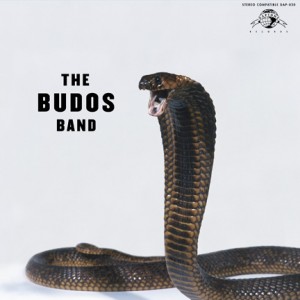
It takes until Track No. 7 rolls around on Budos Band III for a tune entitled “Budos Dirge” to make its appearance. Frankly, this track should have been the title cut. The third album by this NYC-based Afro Beat outfit, the cover of which bears the visage of a coiled cobra, finds the group locked into a sound that should catch the attention of the guy planning the soundtrack to that next sequel to Conan the Barbarian. Thing is, it works! The offerings here are nothing if not disciplined, and it makes little sense to review individual cuts. Predominantly, the tracks range from three to four minutes. The bass and guitar, often doubling, lay down a minor key rhythm figure that is countered by a Fela-inspired unison horn riff. The drums pound out the deliberate– err – dirge– like tempo, and a Farfisia-sounding keyboard adds a third layer of minor key interest. Add a fierce, but economical solo by one of the horn players, and the ensemble is rolling onwards in its irresistible, relentless groove. And groove is the word here. I’ve not seen the Budos Band live, but I have to believe that the brew they’re dispensing is intoxicating to many denizens of the dance floor. The Ramones made a living in clubs for many years playing two minute installments of same sounding songs played at breakneck tempo. The Budos boys take a page from the same book, at a slackened but still driving pace. The band shares a laugh with its audience when, on the album’s final cut (“Reppirt Yad”), it tackles – and thoroughly Budosizes – the Beatles’ mid-60’s hit, “Day Tripper.” It’s as if they’re saying, “See? Even Lennon & McCartney can be enslaved to our designs.” As can we all. Easily, the Budos Band’s best outing.

Devo, Something For Everybody

July 25th, 2010

Artist: Devo
Title: Something For Everybody
Label: Warner Brothers 53975
Release Date: June 15, 2010
Genre: New Wave

“What we do / Is what we do / It’s all the same / There’s nothing new.”  Those are some of the lyrics from the track, “What We Do.” There is some truth to those lyrics and it is also an understatement.

This album does have elements of vintage Devo; the stiff geeky beats, pop hooks and social commentary. There’s nothing new. But there is a brilliance to admitting that what they do is what they do, and have it sound still fresh but yet capture their prime sound. “It’s so fresh it almost makes me want to cry.” Sings Mothersbaugh on the opening track. The song immediately pulls you into the album with the stuttering delivery of the lyrics and the snotty new wave guitar riff.

“Don’t Shoot (I’m A Man)” features the paradoxical lyrics of devolution. It pits the miracle of life against our need to work everyday and the risks we take dealing with a society that has gone mad. But yet in true Devo form, they make it sound fun not didactic or preachy.

Devo sends the same message of warning about the direction of our culture, much like the message of a folk song, but they also include a new wave twist of the Emma Goldman quote, “If I can’t dance – I don’t want to be part of your revolution.”

It’s been about twenty years since there was a truly new Devo record. It is not  a perfect record but it is a damn near perfect representation of what Devo is. Devo gives us a rhythm to rally around and if you open your mind, they offer something for everybody.

In the Heat of the Night Soundtrack

July 24th, 2010

Artist: Quincy Jones et al.
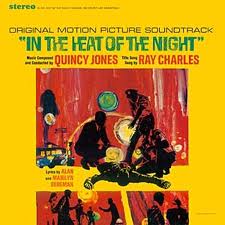
Title: In The Heat of the Night – soundtrack to the motion picture
Label: United Artists 91256
Release Date: 1967
Genre: Soundtrack

Purchased: Exclusive Records, Milwaukee, Wisconsin, July 17, 2010
Price: $5.99
Vinyl Condition: Very Good

I first rented the VHS of In The Heat Of The Night in the early 80s. Being a Ray Charles fan, I immediately searched my 30 or so Ray Charles records looking for the title track on some compilation or late 60’s ABC-Tangerine release. But I found nothing.

This was before the days of eBay, and even before the days of CDs. This was back in the days of the Phonolog. And it, the Phonolog, the grand yellow and black bible of music at the time, told me it was out of print. To get a copy of In The Heat of the Night, you had to find a used copy of it at a record store, thrift store or garage sale.  Along with other Holy Grails, the “In The Heat of the Night” soundtrack was filed away in some abscess of my brain.

In 1997, Rhino Records released the box set, Beg, Scream & Shout: The Big Ol’ Box of  60’s Soul. It was 144 songs by 144 different 60s soul artists. The one song they chose to represent Ray Charles was, “In The Heat of the Night.” It was the first song that I listened to upon purchasing the box set.

A vinyl repress came out in 2004, but I pad no attention to it, satisfied with what I had.

On a recent visit to Milwaukee for an old friend’s wedding, I paid my first visit to Exclusive Records. There it was, in the recent arrivals bin, a used copy of the original pressing of In The Heat of the Night. I looked around the record store, like I had found a stack of hundred dollar bills and then clutched the record him my arms, holding onto it until it joined other used records in a pile that I would buy and take home.

My wife commented that it was too bad I didn’t bring my portable turntable, (which is actually pretty monstrous compared to today’s portable music players) then I could have listened to my records in the hotel room. I told her if I had brought it along, I might have missed the wedding, opting to hole up in my room with my new stack of vinyl.

Two days later I’m home and I set the Quincy Jones produced slab of vinyl on the table. Ray belts the blues and I get happy.  It’s the only number he sings on the record but he does add a piano solo on another track, “Mama Caleba’s Blues.”

The album tracks into soundtrack music that leans more towards jazzy blues with a lot of tension. I’m very impressed with how free the jazz is for a mainstream film. I pick up the record to read the liner notes and I find out that it is Roland Kirk blowing the flute. Of course it had to be Roland Kirk. No other flautist sounds like him.

With my preoccupation with the Ray Charles sung title track, I never knew about Roland Kirk’s contribution to the album. Or Glen Campbell’s for that matter.

Film director Norman Jewison wrote, “Quincy then added the unique and startling Roland Kirk, the blind flautist from Chicago who talks through his amplified flute with a language all his own.”

Quincy added, “I need his anger, man, and his loneliness.”

Kirk’s sound really does bring the album to another level. His jazz is emotion. It’s an abstract of the human element. And what compliments that is a guy named Don Elliott.

Elliott has a varied background in jazz from being a swing mellophonist to a vocalist, the brains behind the Nutty Squirrels – a Chipmunk-styled band that actually predated the Chipmunks in music and animation – to a jingle composer, and soundtrack composer. But on this soundtrack, he provides vocal percussion, sounding a perversion of Mingus grunts and howls. Those two effects, Kirk’s and Elliott’s, complete the soundtrack, taking the genius of Quincy Jones to a higher plane.

As for Campbell, Glenn picks his banjo on various cuts and sings a song called, “Bowlegged Polly.” The number sounds as if it was written for Roger Miller, but Glenn pulls it off.

The other countrified cut is called, “Foul Owl,” preformed by Boomer & Travis. “Foul Owl” appears in the film as a jukebox selection by one of the characters under suspicion. The song that was supposed to be selected was, “Little Red Riding Hood” by Sam The Sham & The Pharaohs, but apparently Sam’s selling price was too high. So what we have is a song sounding remarkably like “Little Red Riding Hood.” Also, Boomer and Travis was a pseudonym for the country duo Lewis & Clarke, which was also another name for Owens Boomer Castleman and Michael Martin Murphy.

If I wouldn’t have been so focused on the search for the Ray Charles title track, and had a greater awareness of the Roland Kirk and Don Elliott contributions, I would have pursued to obtain this album more intensely. Instead it was Christmas in July in the heat of Milwaukee.

Dee Felice Trio, In Heat

July 5th, 2010

Artist: Dee Felice Trio
Title: In Heat
Label: Bethlehem BS-10000
Release Date: 1969
Genre: Soul Jazz
Condition: Very Good

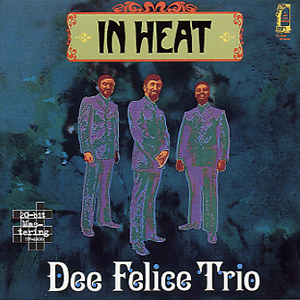
First thing I noticed was the “James Brown Production” logo in the upper right corner. James might say it best in the liner notes, “The music in this album is a “mixed bag,” whether your “Stroke” is Soul, Rock, Blues, Folk or Bossa Nova – it’s here to hear AND ALL WITH AN UNDERLYING Jazz Beat.”

Apparently the Godfather of Soul fell in love with these guys after hearing them in Cleveland, and produced the album for them. Apparently they have some session credit on a few other James Brown cuts from this time period too.

To me, it sounds like another version of the Ramsey Lewis Trio, piano, bass and drums, running through contemporary standards and a couple of originals. It’s not funky like a James Brown record, but rather safe. It wouldn’t insult a jazz head but would also be fine for a cocktail party.

The version of “Wichita Lineman” was another reason I bought the record. I’ll buy any album with that Jimmy Webb number on it. All and all it’s a decent buy, nothing mind blowing but nothing too stupidly insulting.

The blue James Brown label was one I hadn’t seen before. I’m guessing it’s a repress because it seems to be in too good of shape to be an original. Plus, projects associated with James Brown, generally go for more money.

James Brown concludes on the Liner notes, “I personally feel that Dee, Frank & Lee are three of the “Strongest” Musicians around today. It took me three years to find time to hear the Dee Felice Trio, you can Do It Now – just put the record on the box, turn up the volume and Dig, Baby, Dig.”

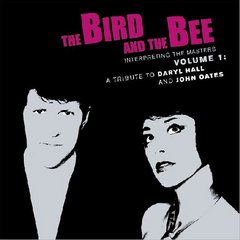
The Bird & The Bee, Interpreting the Masters, Vol. 1: A Tribute To Daryl Hall & John Oates

July 5th, 2010

Artist: The Bird & The Bee
Title: Interpreting the Masters, Vol. 1: A Tribute To Daryl Hall & John Oates
Label: Blue Note 26234
Release Date: March 23, 2010
Genre: Pop

Our little bird, Inara George, told me that she and her musical partner Greg Kurstin believe that Hall & Oates are masters of their art. I first took it as a rather tongue in cheek statement in regard to other musical masters like Bacharach & David or Goffin & King.

But then again, George (the daughter of the late Little Feat vocalist, Lowell George) and Kurstin are children of the 80’s and what duo dominated early 80’s pop radio more than Hall & Oates?

I’ll admit to being a closet Hall & Oates fan, sneaking in Lou Rawls’ version of “She’s Gone” and the Dramatics take on “Do What Ya Wanna Do” at DJ gigs, but rarely did a true Hall & Oates song grace the tables. I never thought of them as masters.

Now, having the chance to revisit these songs through the voice of The Bird & The Bee, Hall & Oates crafted some fine pop numbers. They have nice hooks, catchy accessible lyrics and a touch of soul. And what George & Kurstin do to them isn’t too far from the original, but more or less of an electronic updating.

The radio-ready light pop voice of George is a perfect match for these compositions. Kurstin’s programming and keys combine with George for a sixties-cum-new millennium tropicalia feel. Her voice overdubs are breezy and Kurstin’s keys buoyant.

I’m not sure if the “Vol. 1” in the title means that there will be another interpretation by this duo of another band or they’ll do another Hall & Oates record, because there are room for both. They barely scratched the surface of the Hall & Oates catalog, choosing eight rather obvious hits and adding an original, “Heard It On the Radio,” a number about hearing Hall & Oates songs on the radio.

And they stick to the radio very closely, covering the radio edit version of “She’s Gone” and never going into a deep album track. “One On One” displays a depth in George’s voice, providing more soul than I thought the little bird could dish out. Other tracks include “I Can’t Go For That,” “Rich Girl,” “Sara Smile,” “Kiss Is On My List,” “Maneater,”and “Private Eyes.”

Hall & Oates were masters of radio pop in the late seventies and early eighties and George & Kurstin confirm and expand that.