The Butanes featuring Willie Walker, Long Time Thing

July 19th, 2011

Artist: The Butanes Featuring Willie Walker
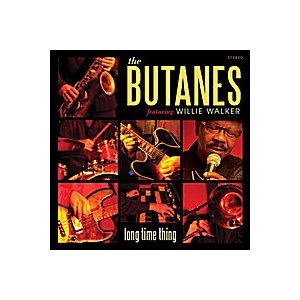
Title: Long Time Thing
Label: Haute Records 1111
Released: April 8, 2011

The Butanes have set the standard in the Twin Cities blues scene for nearly 30 years. Their professional approach to the business and their abilities within the idiom have landed them jobs at home and abroad backing some of the legends of soul, blues and r&b, like Bo Diddley, Percy Sledge, Johnny Copeland, Little Johnny Taylor and many more.

Long Time Thing is a culmination of the blues and its sub-genres. Leader Curtis Obeda admits, “We did want to make a blues record but not the usual one. Willie (Walker) and I chose to pattern it on Sam Cooke’s My Kind of Blues but it’s more their kind of blues” drawing upon the drawing upon the band’s influences and musicians with whom they have worked. It touches upon Sam Cooke, Louis Williams, Ray Charles’ work with the Basie band, Hubert Sumlin, Albert Collins and James Carr to cite a few.

What sets this apart from other modern blues albums are Willie Walker’s Memphis pedigree, Michael B. Nelson’s horn arrangements and all the tracks are Obeda originals. You don’t have to sit through another version of “Mustang Sally” or “Sweet Home Chicago.”

Walker possesses a pure soulful voice. He naturally works his way through songs, relying on instinct and talent, not mechanics. He’s a Sam Cooke devotee, but he’s flexible, being able to embody the blues in “Dirty Deeds” or “If You Expect To See Another Day.” Conversely, he can swing easy in numbers like, “I’m Okay,” and “You Never Had A Love Like Mine,” and turn it up a notch in the title track as well as in “I Just Don’t Believe.” Walker adapts well to the dynamics of the disc.

Michael B. Nelson has a long list of credentials: he toured and arranged horns for Prince and has either backed or written arrangements for Sammy Davis Jr., Chaka Khan, Maceo Parker and Larry Graham. Five of the sixteen tracks on Long Time Thing incorporate a ten-piece horn section, with Nelson playing trombone.

Many of the Obeda originals were songs he had written with other musicians in mind. “You Never Had A Love Like Mine” came from working with Little Johnny Taylor, “How Long You Think You Got” was tailor-made for Bonnie Raitt, and “Let’s Fall In Love” were inspired by a phrase from James Carr, while Carr dined on fried chicken and played Spades at the Obeda residence. The point is, these songs respect the traditions of their respective genres, listening to Long Time Thing is like opening up a time capsule and hearing songs that were tucked away for the last 40 to 50 years.

Long Time Thing is a reflection of Obeda and the Butanes’ career in music. It travels across the same varying terrains of blues and soul the band has traversed over the years. It draws upon the music they’ve played, musicians they’ve encountered, legends they’ve created and truths they’ve lived. After almost thirty years in the business, it is safe to say that the band is still a long-time thing. They have not taken any shortcut to achieve a short-term gain.
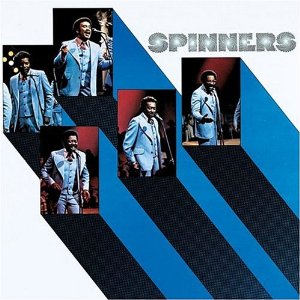
Songs I Turned Up: Could It Be I’m Falling In Love, The Spinners

June 22nd, 2011

Songs I Turned Up!

Artist: The Spinners
Album Title: The Spinners
Song: Could It Be I’m Falling In Love
Label: Atlantic SD 7256
Released: 1973

Fame and success don’t always go hand in hand, as is the case of the Spinners. With a recording career started in Detroit in 1961, the Spinners released 17 singles throughout the remainder of the decade, with only two of them cracking the Billboard Top 100. Not even 1962’s “I’ve Got Your Water Boiling, Baby (I’m Gonna Cook Your Goose)” could bring them fame.

Their seven-year tenure at Motown could be viewed as a success, finally breaking the top twenty with Stevie Wonder’s “It’s A Shame” in 1970. But other than 1965’s “I’ll Always Love You,” (reaching #35) the Spinners gained more notoriety as the Temptations’ chauffeurs. Motown recognized their talent but they could not find the right formula for the Spinners at Hitsville, U.S.A.

Some say it was Aretha Franklin that suggested the Spinners not renew their contract and move onto Atlantic Records. Maybe it was her pull that got them the contract. Nonetheless, the Detroit-bred group soon became a model for Philly Soul, as Atlantic teamed them with producer-arranger, Thom Bell.

Their first single at Atlantic came in 1972, “How Could I Let You Get Away” b/w “I’ll Be Around.” Yes, “I’ll Be Around” was the b-side. If it wasn’t for some astute DJ across the nation, success may have eluded the Spinners once again. Those two tracks ended up on their self-titled debut album for Atlantic Records, along with a three other top 40 singles and a swinging remake of Wilson Pickett’s “Don’t Let The Green Grass Fool You.”

Thom Bell found the right formula, keeping a little of the Detroit grit in the guitars of Norman Harris & Bobby Eli. The Don Renaldo strings add pop sensibilities to the tracks and the addition of the background voices of Linda Bell, Barbara Ingram, Carla Benson & Yvette Benton, make it even sweeter.

The emergences of Phillipe “Soul” Wynne, sharing lead vocal duties with tenor Bobby Smith was the final ingredient in the recipe of fame and success. Listen to “Could It Be I’m Falling In Love,” with Thom Bells’s keys underpinned by Larry Washington’s congas, the strings, the girls and finally, Wynne ad-libbing over the coda. The Spinners had arrived!

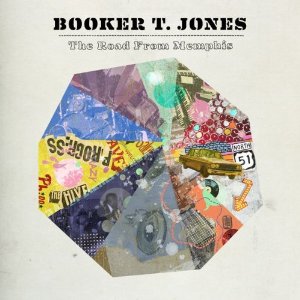
Booker T. Jones, The Road From Memphis

May 11th, 2011

Artist: Booker T. Jones
Title: The Road From Memphis
Label: Anti 87101
Released: May 10, 2011

Booker’s last record, Potato Hole, from two years back, did very little for me. Jones was backed on Potato Hole by the Drive-By Truckers and Neil Young. As much as I respect Neil Young and Booker, the album lacked a soul. It’s an album I tried to go back to several times that year, but found little joy in the grooves.

I was skeptical upon hearing of the release of Road To Memphis. I nearly ignored purchasing it. Odd thing about it was that I bought it on the strength of Jones’ collaborators on the new record, namely Yim Yames, Sharon Jones, Lou Reed and the Roots. The title intrigued me too. I figured if Jones is going to mention his hometown in the title, there’s going to be a groove.

And I was right!

From the opening track, “Walking Papers” I knew right away that this album is going in a totally different direction than Potato Hole. First of all, if you’re going to find a contemporary band that knows its Black music history and still keep the sound somewhat new, you employ the Roots. ?Love’s drumming still finds a deep pocket, but the added fills dip into jazz. Their strength is the Philly sound but when playing with Booker, you can sense the synergy with the power of both Memphis and Philadelphia coming through. And if that wasn’t enough, why get Detroit to represent by adding Dennis Coffey on guitar. But it’s still Booker’s organ that’s in front.

Eight of the ten songs are Jone’s originals. The two covers are interesting too. They are instrumental takes on Gnarls Barkley’s “Crazy” and Lauren Hill’s “Everything Is Everything” with the latter working better than the former. Of the seven instrumental tracks on The Road From Memphis, the most MG-like is “The Vamp.” Bassist Owen Biddle nails the Duck Dunn bass line while Coffey chops his way through the rhythm. It’s also ?Love’s least busy drumming, where he pretty much sits in the pocket and doesn’t leave it.

Of the vocal numbers, Lou Reed, rolls through the streets of the Bronx at a pace similar to that of William DeVaughn’s “Be Thankful for What You Got.” It’s a great vehicle for Reed, the Roots and Booker T. If any track on this album could get crossover radio play from alternative to urban stations, this is the one.

The Yim Yames contribution should blare all summer from top 40 radio stations to college campuses. It’s got an early 70s good-feel groove, Yames’ and the Roots name recognition for that demographic and it is catchy as Hell.

The Road From Memphis works better than Booker’s previous LP, Potato Hole for a couple of reasons. The the originals are much better songs and his collaborators are more sympathetic to his ideas. It sounds like Booker’s vision of a new LP was realized more than somebody else’s vision for a new Booker T. Jones album.

Dennis Coffey, Dennis Coffey

May 10th, 2011

Artist: Dennis CoffeyTitle: Dennis Coffey
Label: Strut 075
Release Date: April 26, 2011

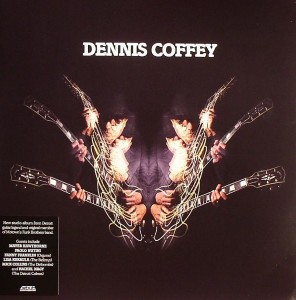
Passive listeners of the radio in the early 70s may remember Dennis Coffey for his top ten hit, “Scorpio,” (#6, 1971) or the zodiacal follow-up, “Taurus” (#18, 1972). If you were growing up in Detroit, his guitar graced Darrell Banks’ Revilot release, “Open the Door To Your Heart” and Edwin Starr’s Ric-Tic release “S.O.S (Stop her On Sight).” And like Starr, Coffey also graduated to the Motown label, becoming a member of the legendary Funk Brothers, adding the licks to Starr’s smash single, “War.” Coffey also backed the Temptations on their hits, “I Wish It Would Rain,” “Psychedelic Shack,” “Ball of Confusion” and “Cloud Nine” among others. He can also be heard on Diana Ross and the Supreme’s fitting finale, “Someday We’ll Be Together.” Outside of Motown, it’s Coffey on the Isley Brothers’ “It’s Your Thing” and on Freda Payne’s “Band of Gold.” And if you happened to see the movie, Black Belt Jones, that was Coffey providing the soundtrack. And to skip to another musical generation, Coffey has been sampled by Grandmaster Flash, the Geto Boys, House of Pain, LL Cool J, Moby, Mos Def, the Fugees, Young MC, Public Enemy and Queen Latifah among others. I’m sorry to report that his book, Guitars, Bars and Motown Superstars, was not selected for Oprah’s Book Club. What’s a guy gotta do?

Coffey, now at the ripe age of 70 releases a brand new album of covers and new material. Along his side are practitioners of the new school, featuring members of Orgone, Kings Go Forth and Big Chief, as well as Mick Collins of the Dirtbombs and Rachel Nagy of the Detroit Cobras. Collins and Nagy sound the most comfortable, singing on the Funkadelic cover, “I Bet You.” Their approach fits nicely in the groove, doesn’t sound forced, nor do they attempt to take over the session. It’s the highlight among the covers on the CD. Mayer Hawthorne’s take on Parliament’s “All Your Goodies Are Gone” isn’t bad, but it only makes me want to hear the original again, whereas Collins & Nagy leave me satisfied. I prefer the instrumental version of the cover of Wilson Pickett’s, “Don’t Knock My Love” over Orgone’s Fanny Franklin’s stab at it. I give her credit for having the guts to cover such a classic. She sounds like she’s channeling Betty Lavette and she keeps it brief at 2:18, not trying to extend it with vocal gymnastics, showing respect for the number. But the instrumental version is more of the psychedelic soul that exemplifies Coffey best. It is his album.

The opening track, “7th Galaxy,” a new Coffey original, is right on. There’s wah-wah’s, distortion, Echoplex tape delays and a killer conga break. All that’s missing is the movie of pimps and black private dicks on the big screen. “Miss Millie,” another instrumental is a collaboration with Milwaukee’s Kings Go Forth. It’s the best I’ve heard from King’s Go Forth, rising to the occasion of playing along side one of their more obvious influences. “Knockabout” is based around a fuzzy riff, with a great B-3 break and wah-wah solo, the echo-effected voices singing non-sense syllables sound like the Ray Conniff singers landed on the wrong planet. Whereas the few lines provided by Hershel Boone in “Plutonius” work well in a spacey-funky way.

“Only Good for Conversation” is a little overwrought for my tastes, with distorted power chords and Paolo Nutini sounding more like he should be singing in front of Vanilla Fudge or Iron Butterfly. It’s a cold fact that I wasn’t familiar with the original version by Rodriguez. I prefer Coffey’s less bombastic performace on the original as well as Rodriguez vocals, taking more of a Ginger Baker approach of walking through the song.

The album is an homage to Detroit. Coffey’s choice of covers from his past and from the Motor City culture, compliment his new originals as well as the new purveyors of the genre. He stands tall amongst youngsters, schooling them a bit and making a fine record at the same time.

Charles Bradley, No Time For Dreaming

May 9th, 2011

Artist: Charles Bradley
Title: No Time For Dreaming
Label: Dunham 1001
Released: January 25, 2011
Genre: Neo-Soul

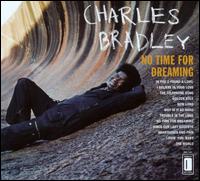
At 63 years of age, Charles Bradley still purveys raw talent. His vocal approach is often compared to James Brown and Wilson Pickett’s painfully exposed delivery, but those men defined it as a style. I believe Bradley does it this way because it is the only way he knows how.

Backed by the Daptone stable of thoroughbreds, horses and mules, the album trots along soul soundscapes that blend Memphis, Detroit and New York, never pegging anyone of them perfectly, thus creating the Daptone sound. At times they also reveal their hip-hop influences, with precision beats that sound as if they were sampled and looped. (This is more apparent listening to the tracks as mp3s than on vinyl. Maybe it is just a product of the format.)

“How Long” tracks like “It’s a Man’s Man’s World,” but the strange reverb in the opening is straight out of Blacksploitation flicks of the 70s. “Heartaches and Pain” the gem of the album is the closest Bradley and band comes to pulling off a straight representation of 60s soul, with its social commentary and honest tribute to a sound. (And kudos to the background vocalists throughout the album.)

Bradley’s range is limited but he makes up for it with timely screams and gritty extended notes. Sometimes the band gets in the way with some busy production, sounding like they are trying to distract us from other shortcomings. Maybe it was the theory that his raw voice needed to be balanced by layered arrangements. Sometimes polishing isn’t needed to appreciate the value of natural resources. Daptone has a soul mine in Bradley, let’s see how they use it.

-Jackson McLemore

Scandalous, Black Joe Lewis & The Honeybears

April 21st, 2011

Artist: Black Joe Lewis & The HoneybearsTitle: Scandalous
Label: Lost Highway 15215
Released: March 15th, 2011

In a recent interview, Black Joe Lewis pointed out, “People call us a soul band but we’re more of a rock band. “The Honeybears lead guitarist, Zach Ernst further confirmed that by stating, “We always joke that we would do that kind of music, but we’re not good enough: our guitars are too loud, we’re too primitive on our instruments, and Joe is more of a shouter and a talking-blues guy than a smooth soul singer.”

Their realization of their collective self, exhibit the bands focus on their abilities and their respect and knowledge for music. That doesn’t mean that they do not incorporate the essence of soul into their blues charged rock though.

Scandalous opens with the track, “Livin’ In The Jungle,” with the Honeybear horns blasting like they were playing on the Stones Sticky Fingers sessions. The rhythm guitar chanks an early funk sound, but all and all, this is horn driven rock that isn’t square. “Black Snake” is reminiscent of “Resurrection Shuffle” by Ashton, Gardner & Dyke, but it would be a disservice to the Joe & the band to compare them to those brass rockers of the early 70s – like Chase or early Chicago – because the Honeybears can swing.

“Booty City’s” horn riff is lifted from Edwin Star’s “25 Miles.” Joe shouts through it with the meter of a James Brown delivery, but the guitar solo during the break is more likely to be found in a Funkadelic number.

Their bombastic cover of Ivory Joe Hunter’s “Since I Met You Baby” truly shows the bands distance from the real goods but also their relative proximity. They know they can’t do it justice by reading it note for note, but yet feel the need to share their love for the song, and this is the only way they can purvey that honestly.

So even with the references to Funkadelic, James Brown and Ivory Joe Hunter, I’d still claim them to be a rock band. When purchasing the vinyl edition of Scandalous, not only do you get a fine 180 gram pressing on clear vinyl, but you also get a bonus platter, with six cover versions, You get Robert Johnson’s classic, “Stop Breakin’ Down,” Freddie King’s “Funny Bone,” Hound Dog Taylor’s “Let’s Get Funky,” Junior Wells’ “Snatch It Back & Hold It,” plus a nine minute take on Howlin’ Wolf’s “I Asked For Water.” But then smack dab in the middle of these bonus cover versions, there’s The Dead Boys’ “What Love Is.” How about a side of punk rock with your slab of blues?

Joe & The ‘Bears resurrected the psychedelic gospel group, the Relatives to play on the track “You Must Be Lyin’.” It is a perfect fit since both bands bend the genres. Zach Ernst attacks the opening like Jimmy Page and the songs floods into a jam sounding like Led Zeppelin meets Sly & The Family Stone.

“Mustang Ranch” Is a talking blues romp in the vein of “Baby Please Don’t Go,” about the bands’ visit to the famous house of ill-repute to get their “ham glazed.” Yes, like all good rock and blues records, they sometimes venture into the “R” rated territory. But you can always get redemption and the Honeybears do by closing the album with “Jesus Took My Hand.” It’s probably not a song you’re going to hear and any of the Lutheran churches anytime soon, but you can hear its roots echoing through the Mississippi Hill Country.

Even with all these references to soul, funk and blues, I’d still agree with Joe that they are still more of a rock band than a soul band.

The Baseball Project, Vol. 2, High & Inside

April 20th, 2011

Artist: The Baseball Project
Title: Vol. 2: High & Inside
Label: Yep Roc 2219
Released: March 1, 2011

I’m writing this on April 20th, 2011. The previous night, my hometown Twins were shut out by the Baltimore Orioles, 11-0. Joe Nathan, once an All-Star caliber closer has been relegated to mop up duty, allowing three runs in the eighth, raising his ERA to 11.37. The Twins fall to 6-11, owning the fourth worst record in Major League Baseball.

And as I write, it is thirty-four degrees outside and snowing. In regard to baseball, there hasn’t been much to cheer about here in St. Paul.

But the beautiful aspect of the game of baseball is that it is a constant. From the immediacy of today’s win we can put yesterday’s loss away. Twenty-four hours ago is already part of baseball’s rich legacy. Maybe we’ll only remember Denard Span’s first inning running catch from the 11-0 loss, and not focus on Vladimir Guerrero’s three-run homer off of Joe Nathan. Heck, even Mariano Rivera can’t escape a bad night. He gave up two runs on four hits last night, blowing a save for the Yanks as the Jays rallied and won it in ten, 6-5.

Everyday there’s another story in baseball that may become part of its lore. And the Baseball Project recognizes this, immortalizing the game in fine rock fashion.

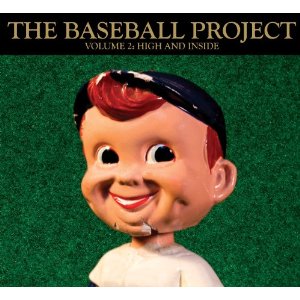
The title indicates that this is the second effort from the group that consists of Steve Wynn (Dream Syndicate, Gutterball), Scott McCaughey (Young Fresh Fellows, the Minus 5), Peter Buck (R.E.M.) and Linda Pitmon (Zuzu’s Petals). There are no hints of a sophomore slump. Again the band displays their love for the game with pop hooks and history lessons. It’s like the Schoolhouse Rock of Baseball.

References to the Minnesota nine occur three times on the disc. (Four if you count the song about Carl Mays. Former Twins pitcher Joe Mays was a distant cousin.) Former Twin City dweller, Craig Finn, once of Lifter Puller and now fronting the Hold Steady contributed the track, “Don’t Call Them Twinkies,” recounting the success of the Twins. With their success in developing talent and winning two out of three World Series they participated in, Finn sings, “Grab yourself a 3.2 beer / And raise a toast to Gardy / These are the Minnesota Twins / Please don’t call them Twinkies.”

In “Fair Weather Fans” Linda Pitmon owns a verse about growing up outside of Minneapolis, glued to the radio in the ‘70s, listening to the Twins games. Now she lives in New York, confesses to having an affinity for the pinstripes, but still cheers on the Twins when they play the Yanks.

But my favorite of the three is the song, “Look Out Mom,” that opens with; “Denard Span seems a fine young man / Doesn’t curse, abuse or litter / When the Twin City Twins are racking up wins / It all starts with the lead-off hitter.” The song goes on to claim that Span is a good son, getting his mom great seats by the dugout, but “Look Out Mom!” The track is in reference to the pre-season game that Denard hit a foul ball into the stands and it struck his mother.

The Project relays a similar story about Bob Feller’s mom attending on Mother’s Day and getting hit by a foul ball that was pitched to a batter by Feller. It also recants the sad story of Manny Mota hitting a foul ball and killing Alan Fish, a fan in the stands. There is no mention though of the time when Richie Ashburn hit the same woman in the stands, twice, during the same at bat.

Besides the Twins, the band sings about Mark Fidrych, Tony Conigliaro, Roger Clemens, Billy Buckner, Carl Mays, Pete Rose and Reggie Jackson among others. The Reggie track is “The Straw That Stirs The Drink.” It recalls quote from Jackson while he was wearing pinstripes. He told reporters of all the other high-level personalities on the team, but he was “the straw that stirs the drink.” The Project sings of Jackson’s boasts, “I’m a card carrying member of Mensa / I’ve got MVP trophies on my credenza.”

“Chin Music” incorporates the title, “High and Inside” in it’s chorus. It’s a tribute to the pitchers that successfully could shave the hitters, like Sam “The Barber” Maglie, Don Drysdale, Bob Gibson and Ryne Duren. (Cub great Ryne Sandberg was named after Duren.)With his Coke-bottle glasses, Duren was a showman, purposely throwing wild pitches during his warm-ups to excite the crowd and scare the hitters. The Baseball Project romanticizes this era of baseball, criticizing today’s game with the verse, “Pitch count, set-up men, five-man rotations / Whirlpool, Tommy John, pinpoint location / And they still can’t do what the old guys did / Ah chin music / A little chin music / Separate the men from the kids.”

But on the other side of that pitch the band sings a ballad about a pitcher with the reputation of being a headhunter, Carl Mays. Mays threw the submarine ball, roughed up the cowhide and splattered it with spit. He also threw the pitch that killed Cleveland Indian, Ray Chapman. After the death of Chapman, the rules changed in baseball; roughed up balls were tossed out of the game and the spitball became illegal.

“The Panda & The Freak” celebrates the great nicknames of the game, like Mudcat, Catfish, the Spaceman, Goose, Bird, Rooster, Penguin and Turkey Mike. But the song is built around two of the San Francisco Giants, the Panda (Pablo Sandoval) and the Freak, (Tim Lincecum.) So when the baseball season gives you little to celebrate, play the Baseball Project disc. Vol. 2 and its predecessor are both worth buying but their second release has more of a hometown twist for Twins fans.

Songs I Turned Up: Just My Imagination, The Temptations

April 13th, 2011

Songs I Turned Up

Artist: The Temptations
Title: Just My Imagination (Running Away With Me)
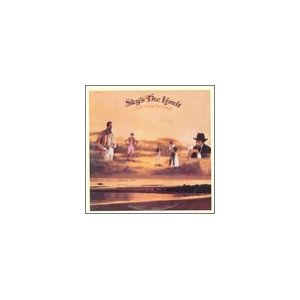
LP: Sky’s The Limit
Released: 1971
Date Heard: April 10th and 11th

It was Sunday morning and I was listening to an encore airing of American Top 40 from 1971. The number one hit for the week was the Temptations’, “Just My Imagination (Running Away With Me).” Marvin Gaye’s “What’s Going On” was slotted at number two. It was a nice double-shot of early 70’s soul. While driving home from work at about 1:00 am, I again heard the Tempts’ cut. That’s when I turned it up.

If you look at the Temptations chart history, “Imagination” stands out because it charted in a time where they were in the midst of the psychedelic-soul phase. 1968 saw “Cloud Nine” peak at number nine on the Billboard Top Ten. In 1969 both “Runaway Child Running Wild” and “I Can’t Get Next To You” were Top Ten hits with the latter hitting number one. “Psychedelic Shack” and “Ball of Confusion” peaked at number three and number seven, respectively in 1970. Then came “Just My imagination” in 1971 and “Papa Was A Rolling Stone” in 1972.

Apparently, they were getting some flak for abandoning their soul side for the harder edged psychedelic soul and producer Norman Whitfield responded by constructing this masterpiece. The result was a piece that transcended soul music into a grandiose pop hit.

Whitfield employed the Motown studio band, the Funk Brothers and the Detroit Symphony Orchestra to back the Temptations. It’s Eddie “Chank” Willis’ guitar that opens the track, followed by Bob Babbit’s bass. The string sections breezes in with the Tempts’ vocals riding upon them. And then to accent the arrangement, the Funk Brothers’ Jack Ashford patters the marimba, sounding like wooden wind chimes.

When Eddie Kendricks take the lead, drummer Andrew Smith has a steady beat on the rim of the drum, simulating the ticking of a clock, which is a reference point to this dream-state that Kendricks beautifully chirps through, will have an end. Kendricks meanwhile spins this tale off what a lucky guy he is to have such a beautiful woman. Soon they’ll marry, have a country home and have two or three kids. He reminds us between every verse in the chorus that it is just his imagination running away with him, but the arrangements are so intoxicating that you get pulled into his daydream.

Willis’ guitar is a little further down in the mix and when the song comes to the bridge a harp owns the riff and fellow Temptation, Paul Williams takes the lead for one line, “Every night on my knees I pray.” Kendricks continues with the lead at a steady meter, but when it comes to the line, “in reality, she doesn’t even know me” he slows down slightly, sending the song off-kilter for a moment, just enough to break the dreamlike state.

To fully appreciate this song, don’t listen to it on a compressed mp3 file. Find a remastered CD or an old piece of vinyl and listen to it on a nice stereo system. You will be amazed.

Songs I Turned Up: Rock & Roll, The Velvet Underground

April 6th, 2011

Songs I Turned Up

Artist: Velvet Underground
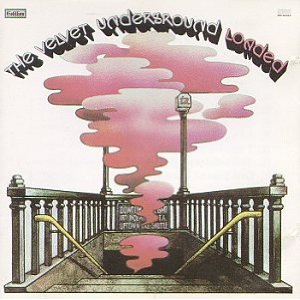
LP: Loaded
Title: Rock & Roll
Label: Cotillion
Released: 1970
Date heard: Tuesday, April 5th, 2011, around 10:00 am.

The song was introduced by Steven Van Zandt amongst a handful of failed predictions; man would never travel by flight, automobiles would never exceed four million in yearly production, and according to a survey from years gone by, it was concluded that people no longer wanted to listen to rock and roll.

I had my own “rock is dead” moment the other night, working the Black Joe Lewis show, carding people and realizing that seventy-five percent of the audience was somewhere in the thirty-five-to-fifty-five age bracket. Don’t kids these days know that rock and roll can save their lives?

I thought about the Who’s “Long Live Rock” while driving home that evening, thinking about the celebration of rock and roll, like the Raspberries, “Overnight Sensation,”  and the Byrds’ “So You Want To Be A Rock N’ Roll Star” as well as Patti Smith’s version. The following morning the Velvet Underground’s “Rock & Roll” played on the radio and I turned it up to ten.

I listened to its simplicity; its inverted 1-4-5 progression and the discovery of hearing rock and roll on the radio. It is simplicity that rock turns to when it re-invents itself; sixties garage, seventies punk, the borrowed beats of rap and hip-hop, the power chords of grunge, and a return to the low-fi aesthetics of the Velvet Underground’s third album.

The Velvets had a short-varied history. Their first LP the Velvet Underground & Nico, was shrouded in the 1960s NYC art scene, White Light/White Heat was an artistically successful experiment in organized noise while the self-titled third album was decidedly quiet. MGM / Verve dropped the band after little commercial success.

Loaded, their final studio album (not counting Doug Yule’s Squeeze) was released on Atlantic’s Cotillion subsidiary, with the title being a reference to it being loaded with hits. Lou Reed would leave the band in August of 1970 with the LP being released in the November of the same year. The “hits” were “Sweet Jane,” “Who Loves The Sun” and “Rock & Roll.” None of the songs charted in the Billboard Hot 100.

There’s a bit of irony in that. The fact that “Rock & Roll” is one of the greatest self-celebrating rock songs and was never a hit. But that’s also the beauty of it. When Lou Reed sings of Jenny (or Ginny) hearing rock and roll on the radio and it saving her life, he’s speaking to the outsiders that find rock as a refuge. In four minutes and forty-seven seconds Reed encapsulates the celebratory experience of separation and identity. He sings of the generation gap and the the difference in ideals. And as we age, some of us still carry that torch. We still have that need for separation and identity.

“And baby it was all right,
And it was all right,
Hey it was all right,
It was all right.”

Papa John DeFrancesco, A Philadelphia Story

March 24th, 2011

Artist: ‘Papa’ John DeFrancesco
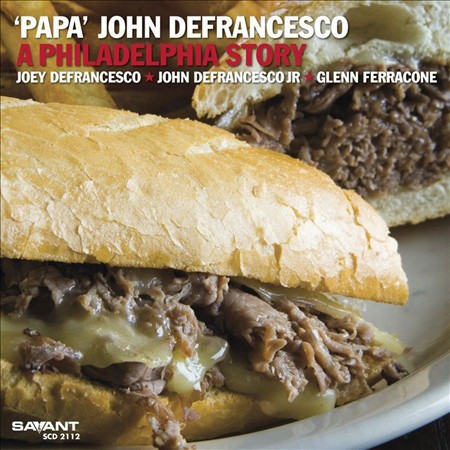
Title: A Philadelphia Story
Label: Savant 2112
Release Date: March 22, 2011

Devotees of soul jazz records made by the great B-3 players like “Groove” Holmes, Jimmy Smith, Dr. Lonnie Smith and Brother Jack McDuff, run out to your local record dealer and immediately grab this new disc by ‘Papa John’ DeFrancesco. It’s like steppin’ back to 1972.

DeFrancesco’s choice of covers are retro as well, opening the disc with a version of the Temptations’ “Papa Was a Rolling Stone,” and then sliding into a slinky version of Cream’s “Strange Brew,” basing it on the guitar riff Clapton lifted from Albert King.

The CD is mostly a trio of ‘Papa’ John on the B-3, along with John Jr. on guitar and Glenn Ferracone, his drummer for the last ten-plus years. Joe Fortunato add some tenor sax on Oscar Pettiford’s “Blues In Orbit” and Joey DeFrancesco, John’s other son, blows the trumpet on the opening track and on the Jimmy Webb classic ballad, “By The Time I Get To Phoenix.”

“Phoenix” is the only ballad on the CD, it mostly swings along never venturing into hard bop, relaying more on r&b grooves. The closing song, the album’s title track is an excursion into blues with both senior and junior DeFrancesco stretching out. This is also one of the two originals on the CD, the other being, “Dr. Mike,” an ode to ‘Papa’s’ personal physician.

John Jr.’s guitar work on the Isley Brothers’ “It’s Your Thing” ignites with chunky funk chops and then steps on wah-wah pedal. His versatility is apparent when he slips into a thumb-heavy version of “You Are My Sunshine,” slightly reminiscent of the great Wes Montgomery.

“This album is a Thang!” to quote Lou Donaldson.