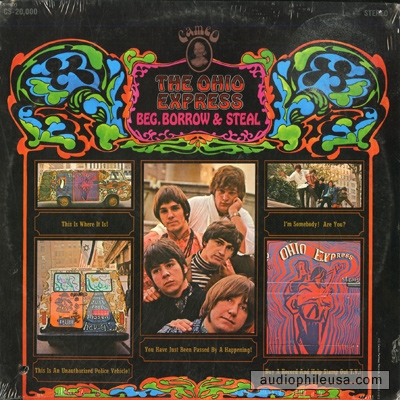
Beg, Borrow & Steal, The Ohio Express

January 2nd, 2013

ARTIST: The Ohio Express
TITLE: Beg, Borrow & Steal
LABEL: Cameo 20,000
RELEASED: 1967
Beg, Borrow & Steal – The Ohio Express

“Beg, Borrow & Steal” is a great pop-rock single. It is obviously based on the “Louie, Louie” chord changes but it employs British invasion harmonies. The Ohio Express is the same band that would go on to score the huge bubblegum hits, “Yummy, Yummy, Yummy” and “Chewy Chewy” as well as “Down At Lulu’s.” Or was it the same band?

In 1966, The Rare Breed, a band out of the Bronx released a single on the Attack label called “Beg, Borrow & Steal.” It went nowhere. Jerry Kasenetz and Jeffrey Katz, operating under the guise of Super K Productions, produced the song. The Rare Breed recorded one more single with Super K at the helm, “Come & Take A Ride In My Boat,” but the band had a dispute with the producers, so they would never work together again. (“Come & Take A Ride In My Boat” went on to be a big hit for Every Mother’s Son a year later).

Kasenetz/Katz would remix “Beg, Borrow & Steal” and release it on the Cameo label under the name of The Ohio Express, a name they owned but there was no band attached to it. When the record broke, Super K had no band to tour to support the song, so they hired a band out of Ohio called Sir Timothy and the Royals and changed their name to the Ohio Express. So in reality, Sir Timothy and the Royals, as the Ohio Express, went out to promote a song recorded by the Rare Breed.

The strength of the single prompted the recording of the album. A majority of the album is New York studio musicians with Sir Timothy & The Royals / The Ohio Express’ lead vocalist Dale Powers. There are a couple of band originals on the record. Keyboardist Jim Pfahler contributed the Byrd-esque “Had To Be Me” and also stole a riff from Wilson Pickett’s “Ninety Nine & A Half Won’t Do” for the cut “Hard Times.” He also wrote the second best number on the record, “I Know We’ll Be Together.” The track is derivative sixties rock, venturing into the Rascals’ “You Better Run” but never getting caught with the riffs they are lifting.

Drummer Tim Corwin is credited with “It’s Too Groovy” which should have been written under an alias. It’s one of those throwaway numbers that are supposed to sound humorous. The Monkee’s “Gonna Buy Me A Dog” would be the pinnacle of such creativity and “Groovy” would be at the other end of the spectrum.

As Super K attempted to reap the Ohio land for more bands, the Music Explosion supplied them with “Little Bit of Soul.” They also auditioned a band called “The Measles featuring a young Joe Walsh, later of James Gang and Eagles fame. There are two Measles songs, recorded by the de facto Ohio Express on this LP, “And It’s True” and “I Find I Think Of You.” The latter is credited to Walsh and it’s a hazy piece of sixties pop. “And It’s True” is a ballad in the style of the Beatles with its strength being the instrumental break; a subdued guitar solo worthy of being a background track for a Nescafe commercial.

“Soul Struttin’” was co-written by Tony Orlando and Marty Thau. It’s an attempt to create a new dance craze song that name drops James Brown and it sounds like it was rescued from the dumpster outside of a Mitch Ryder recording session. The Temptations’ “I’m Losing You” riff was also “borrowed” for this session. But no one is begging to hear this stolen track.

The Kasenetz/Katz originals are more realized productions, but they too are very derivative. “Let Go” has that pronounced French Ye Ye march. “Stop Take A Look Around” is a cross between The Clefs of Lavender Hill’s “Stop! Get A Ticket” and the Hollies’ “Look Through Any Window” all sung in a faux rock-folk idiom.

The closing track on side one is a cover of the Standells’ “Try It.” The snidely vocals of the Standells’ Larry Tamblyn is nowhere to be found, but the song is a turning point in the history of The Ohio Express. “Try It” was co-written by Joey Levine. His later demo of “Yummy, Yummy, Yummy” was released under the name of The Ohio Express, thus ushering them into the world of bubblegum. None of the touring band members contributed to the song. It has been said that when “Chewy, Chewy” broke, the band had not been informed of it and were unable to play it at their shows.

Beg Borrow & Steal is more interesting as a history piece than it is as a pop album. It’s a better reflection on the music industry than it is as a representative of good sixties pop rock. The stories are better than the songs.
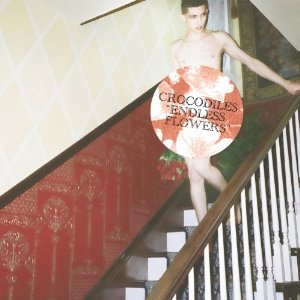
Crocodiles, Endless Flowers

July 6th, 2012

Artist: Crocodiles
Title: Endless Flowers
Label: French Kiss 059
Released June 5, 2012

Upon hearing the single, “Sunday (Psychic Conversation #9)” I knew the band, Crocodiles, had a deeper consciousness than many of the contemporaries I’ve been sifting through as of late. Lyrics like, “It’s Sunday and the world loves itself for all its faults and its explosions of wealth,” are delivered with sneer and irony but are masked by an irresistible melody and wash of sound.

On the track, “No More Black Clouds,” Charles Rowell sings, “Oh my girl / Yes I wanna / Smile laughing / Coughing sunshine over you / And if you were a daisy / Thirsting for a fix / I’d gladly be the dew.” this is like Smokey Robinson meets Morrissey.

All the tracks on Endless Flowers are written by band mates Charles Rowell and Brandon Welchez. They have the ability to fins beauty in solution, trepidation and apathy, which is perfect for the disenfranchised American and the anxious youth. Plus, they wrote riff so accessible, you’d swear they stole them. Even the onslaught of sound cannot bury them.

One can go on an aural exploration of contemporary music and find bands adapting to genres, transforming themselves into time and place, attempting to recreate an authentic sound. Crocodiles produce music that is in the now. It’s not completely theirs – every artist has influences – but they have morphed them to their personal sound. One can site the Jesus and Mary Chain, the Smiths, the strokes a little 80s synth pop and of course calling themselves Crocodiles, you can’t dismiss Echo and the Bunnymen, but there’s never a ten-second stretch in a song where you can pinpoint one of their influences. This is a great contemporary album that is two steps ahead of the past.

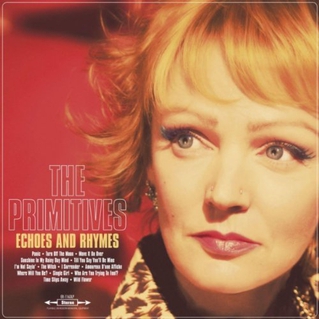
The Primitives, Echoes and Rhymes

June 5th, 2012

Artist: The Primitives
Title: Echoes & Rhymes
Label: Elefant Records 1163
Released: April 30, 2012

The Primitives had a couple of really good LPs in the late eighties with Lovely from 1988 and Pure released in 1989. The argument against this band from Coventry was that they weren’t breaking any artistic ground creating Manchester-influenced jangly pop songs. I feel that writing a great hook is an art in itself. So, I tend to disagree critics that can’t identify with a hook. I find that very shallow.

To you folks who couldn’t identify with their hooks, here are 14 more hooks, but they’re all cover songs. And I’ll wager that some of the geekiest of all music-heads would have trouble identifying the original recording artists. Luckily for us and through the kindness of guitarist Paul Court, all that information is written in the liner notes.

The LP opens with Reparata & The Delrons’ “Panic,” which fits perfectly among their past hits, like “Crash,” slightly distorted power-pop embodying the spirit of 60’s girl groups. It’s songs like this that drew the comparisons between lead vocalist Tracy Tracy and Blondie’s Debbie Harry.

The second track digs deep as it is the flip side of the “Lolita Ya Ya” single from the Kubrick film, Lolita. The star of the film, the fourteen-year-old Sue Lyon, originally sang “Turn Off The Moon.” The Primitives pick up the tempo and drop the strings, converting a very white middle of the road number into a rocker.

The band is good at adding an edge to these female fronted sixties numbers. They’re still poppy but there’s a bit of that punk edge to them. “Move It On Over” doesn’t stray far from the Le Grand Mellon original, the guitar is just meaner.

Their take on Polly Niles’ psyche-folk number from 1970 has more of the psychedelic haze than the folk simplicity. “Till You Say Your Mine” is a very honest interpretation of a Jackie DeShannon song, topping Olivia Newton-John’s 1966 jangly version.

Guitarist Paul Court takes his stab at Nico’s version of the Gordon Lightfoot number, “I’m Not Saying.” It’s Tracy’s harmony that gives it more of an Ian & Sylvia flavor. “I Surrender,” the rhythmically stiff Northern Soul stomper loosens up with a slightly syncopated beat and a buzzing keyboard replacing the horns.

Sandy Posey’s “Single Girl,” is an exception to most of the other tracks on the LP, charting at number twelve in the US and number fifteen in the UK, not making it a rarity. But as some of the girl group lyrics sound corny after time, the Primitives don’t completely transform this song to modern-day relevance, but their emphasis on the bridge provides the subject with more independence.

All and all, the Primitives take these rare tracks and either improve upon them or treat them with the utmost of care, respecting the originals. Covers records can fail miserably, especially if the material is too familiar. Their choices, along with the aid of producer Paul Sampson, make this a very enjoyable album. Also, with current bands out there like, The School, the Pipettes and The Like trying to recreate that girl-group feeling, The Primitives show a good way to attack it is straight on. Find some of those rare songs and learn from them and make them yours.

Beck, I Just Started Hating Some People Today

June 3rd, 2012

Artist: Beck
Title: I Just Started Hating Some People Today b/w Blue Randy
Label: Third Man Records 128
Released: May 28th, 2012

There’s always been some sort of irony present in Beck’s creations. They’re filled with subtle contradictions and conflicts. So when he releases “I Just Started Hating Some People Today” and it sounds like a derivative country song with a couple of trademark Jack White bombastic flourishes, am I supposed to take this seriously?

The first verse about becoming aware of the wiles of others is a winner, but the songs spirals into violent lyrics Quentin Tarantino may find amusing. With lyrics such as:

I just started wanting to punch your face.
You might wanna wear a helmet just in case.
What was once your face is gonna be replaced.
And I just started wanting to punch your face.

I don’t have any other intelligent way to say this, but it’s stupid. And if it isn’t stupid, am I missing out on some inside joke?

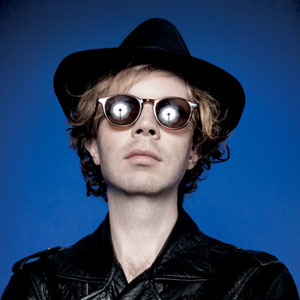
When I listen to Zappa and the Mothers of Invention I don’t quite get it all. But I don’t think I was ever meant to completely understand Zappa’s musical-stylings. And here’s Beck staring at me on the picture sleeve; wearing sunglasses with the reflection of the photographers’ light umbrella in the lenses, just like the picture of Frank on Strictly Commercial.

Is this song supposed to be funny? Is it a parody of country music? Or does Jack and Beck have to step back every now and then and realize not every creation is worth a pressing. Yes, I understand this is a one-off recording and maybe the two were just having a little fun, but I still don’t get it.

Maybe it comes from Beck’s childhood and his father’s involvement with the Fluxus Art Scene. In the Fluxus manifesto it reads, “…art-amusement must be simple, amusing, unpretentious, concerned with insignificances, require no skill or countless rehearsals, have no commodity or institutional value.

If that’s the case, I get it. Except for the part about having no commodity or institutional value. I paid seven bucks for my art-amusement.

And if you’re curious about the b-side, it’s Bukowski-meets-Luke the Drifter. And it is better than the a-side.

The Clean, May 30, 2012, The Echo, Los Angeles

May 31st, 2012

A London Fireman called Bingo introduced me to the sonic delights of The Clean (and The Birthday Party,  The Swans, and Crime & the City Solution) and I never looked back.  Bingo was a madman, but had great taste in music, last I heard he was a fire eater at Killing Joke shows.  ‘Tis true.

Thus enlightened, I ran like the wind to Reckless Records on Upper Street in Islington and slapped down my hard earned 3 quid for The Clean Compilation (on vinyl).  This record was played over and over again in my flat.  Billy Two can still induce an almost palpable sense of that time and place.  Every last fuzz-tone chord evokes a sense of nostalgia, even from first listen, when it hadn’t earned the right to any such associations.

Last night’s show at The Echo was the first time I’ve seen The Clean and they were wonderful.  It was the first show of their US tour and it was a bit sloppy, but the spirit was there.   The hallmark of The Clean is the odd sense of ennui and sadness that shades even their most upbeat songs.  There is an atmosphere of longing and loss on many of their tracks.  A poignancy that infuses everything, it seems.

They opened with the instrumental “Fish”, which was played a bit slower than usual and was more psychedelic, foreboding and lush for it.  “Point That Thing Somewhere Else” was equally affected by this jet lagged tempo shift and seemed both sad and sinister at the same time, like Sister Ray’s little sister, perhaps.  “Billy Two” was a joy and showed how much their bass player, Robert Scott, truly drives this band with simple melodic phrasing and metronome-like timing.  They didn’t play “Beatnik”, as they didn’t have a keyboard, but compensated for it with a rousing version of the almost ludicrously enjoyable “Tally Ho” (where the main riff was transposed on guitar), which naturally made the crowd go mental.   “Slug Song” and “Getting Older” were more pathos filled than ever.  Truly lovely and haunting.  They played for an hour and covered all the faves.  They made everyone  in the room extremely happy (and sad).

The Clean are a garage band by their own admission: Three chords, three instruments, and at times vague, repetitive lyrics.  At one point, at the end of a song, guitarist/vocalist David Kilgour made a mistake and said, “Oh I fucked up, but we’re a garage band, so…” and the whole band burst out laughing.  Somehow they feel like more, they are more.  The simple structure and careworn catchiness of their songs is sort of deceptive, as something else comes through and transcends.  Something that makes me never tire of hearing them.  Go see them when they come to your town and perhaps you will feel it too.  They should be nice and warmed up by then.

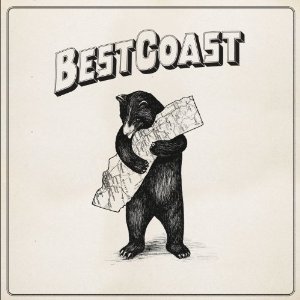
Best Coast, The Only Place

May 25th, 2012

Artist: Best Coast
Title: The Only Place
Label: Mexican Summer 311092
Released: May 15, 2012

I have this odd habit of walking around the house and singing about my mundane tasks. I do this with the worst phrasing possible; elongating syllables to match the meter and usually doing it in a very narrow melodic space, somewhat droning.

If you took this annoying tendency I have and wrote a song for the California Department of Tourism, you would get, “The Only Place,” the new single from the second Best Coast LP of the same name. With lyrics like,

“We have fun/we have fun/we have fun/when we please.” and
“Yes we always/yes we always/yes we always/have fun.”

It leads one to believe Bethany Cosentino attended the Rebecca Black School of Songwriting. Not that the lyrics on the debut album, Crazy For You, were approaching Dylan, at least there was a sense of yearning finding its way through the fuzzy production. It was like the Shangri-Las became Valley Girls. Now the Valley Girls have become bored. These songs are like singing phone texts.

Structurally, there are some nice moments. There are good pop hooks and even the melodies are all right if they wouldn’t be delivered so stiffly. The opening to “Better Girl” could have been written by Marshall Crenshaw, but the phrasing of poor lyrics overshadow what could’ve been a great pop song.

I know it’s an impossible dream, but I wish I could hear what Dusty Springfield would’ve done with this record. If she were around to record the closing track, “Up All Night,” it would’ve been a classic. Soon, the only place for The Only Place is going to be in the used record bins.

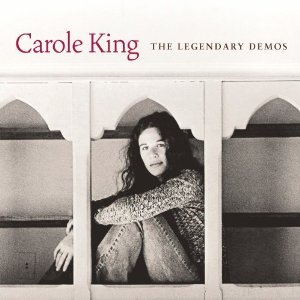
Carole King, The Legendary Demos

May 17th, 2012

Artist: Carole King
Title: The Legendary Demos
Released: May 8, 2012
Label: Hear Music / Concord 33827

Where much of pop music has been the flavor of the day, true craftsmanship stands the test of time. Carole King was a song craftsman. Here heyday was nearly two decades long and what made it last were these two-and-a-half minutes songs of love, loss, bliss, angst, protest and discovery, almost synonymous with a teen primer, but also themes that follow us through life.

The Legendary Demos is exactly what it states. These are the basic first takes of creations of King alone or with her songwriter partners. They were once pieces of paper filled with ideas that went cradled in her arms into a studio and came out as pieces with their own identities.

The album opens with “Pleasant Valley Sunday.” The song derived its name from Pleasant Valley Road, a byway that passed through West Orange, a Jersey suburb where Carole and her then-husband and collaborator, Jerry Goffin lived. Goffin’s lyrics clearly display his distaste for life in suburbia.

Where the Monkees provided the teen angst in the line “I need a change of scenery,” King possessed the only soul as she sang the travelogue through the vapid suburban life on a “Pleasant Valley Sunday.” It is a full-fledged production, complete with fellow studio hands, written for Don Kirshner and his pre-fab four.

Like “Just Once In My Life” (which was made famous by the Righteous Brothers), these songs are transitional in King’s career, bridging the gap between Bobby Vee’s teenybopper take on “Take Good Care Of My Baby” to the more poignant Toni Stern-King composition, “It’s Too Late.” While “It’s Too Late” approaches the lyrical phrasing and sound of the song we’d grow to know from Tapestry, “Take Good Care of My Baby,” really sounds like a sweet young lady pitching a song and carries a certain charm.

“Just Once In My Life” was composed to be the follow-up to the Righteous Brothers smash hit, “You’ve Lost That Loving Feeling.” The composition shows King’s professional approach of custom-tailoring a song for an artist, as well as producer Phil Spector. Her self-harmonies suggesting the parts for the Brothers to harmonize and the distinct conversation in the verses serve this song to Medley and Hatfield on a gold plated platter. The same can be said for her demo of “Crying In The Rain,” this time with the Everly Brothers as the prospective purveyors.

There are thirteen tracks included on The Legendary Demos. It’s interesting and enjoyable to hear a work in progress. Many of the songs were later slightly tweaked by the artist or given the full attention of a studio from a producer, really not veering far from King’s delivery. That shows the amount of respect she held in the music business. Not only are the demos legendary, so is Ms. King.

Grade: A

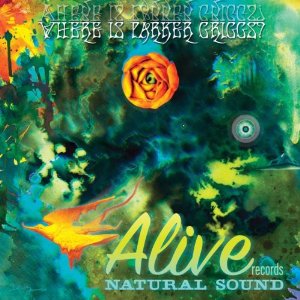
Various Artists, Where Is Parker Griggs?

January 13th, 2012

Artist: Various
Title: Where Is Parker Griggs?
Label: Alive Records 01271
Released: January 9th, 2012

To answer the question, Parker Griggs is on tracks one and four on this label compilation. Griggs is a member of the two-piece power trio, Radio Moscow with bassist Zack Anderson. They hire a drummer for tours, otherwise, Griggs takes on the kit in the studio., along with lead vocals and guitar. “Open Your Eyes” soars in a land that’s part Hendrix, part Blue Cheer, where the words “too loud” do not exist. It is taken from their 2011 release, The Great Escape of Leslie Magnafuzz. Their other offering, the previously unreleased, “The Stranger” Griggs restrains himself in an acoustic boogie with occasional blasts of Zeppelin.

The only other previously released tracks on Where Is Parker Griggs are Brian Olive’s “Backsliding Soul” (which coincidently made my 2011 favorites play list), The Garden’s “Maze Time” and the White Noise Band’s “There Is No Tomorrow.” But, if you wait long enough, the cut by Lee Bains III and the Glory Fires, “Everything You Took” will be available on their Alive Records debut, which will be released in April of 2012.

The Alive website coined the term “psyouthern soul” to describe the Bains Band. I’m interpreting it as soulful southern-rock with psychedelic overtones. Whether my attempt at definition is correct or not, Alive Records does have an aural imprint. When you purchase an Alive release, you’re getting a nice slab of rock, with touches of blues, 60’s garage and psychedelic dust. Label identities are few and far between in this era of the music business. With the single-mindedness of downloads and coupled by the loss of the tangible good, not only does Alive Records create a sound, you can still get the music on vinyl. They’ve been ingenious in the promotions department, marketing the records on limited edition colored vinyl, setting their sites on the pocketbooks of music geeks like me. This compilation was limited to 200, pressed on clear orange vinyl. But if you just want to load up your iPod, the download comes with two extra tracks. So really, both customers, the hard copy nuts and the others who stepped into the new millennium both get rewarded.

From their vaults, a previously unreleased track from the Black Diamond Heavies, “Easy Money,” was unlocked. The track is reminiscent of Heart Attack and Vine era Tom Waits. James Legg pushes his keyboards through high levels of distortion while his voice lays a bed of gravel. The result is a cement mixer playing the blues.

Scott Morgan from the legendary Ann Arbor band, the Rationals, teams up with Henry’s Funeral Shoe on “Gimmie Back My Morphine.” Done in an early-seventies blues-rock idiom, “Morphine” is injected with two more Michigonians; Jim Diamond of the Dirtbombs and the Witches fame, and blues man Harmonica Shah. It’s a multi-generational salute to the Michigan music scene. I haven’t heard this song in twenty-four hours and now I’m experiencing insomnia, high blood pressure and tachycardia as well as involuntary leg movements.

The Buffalo Killers tracks, “Love Is Gold” and “Oh My Word” sound like Buffalo Springfield reunited during Neil Young’s Rust Never Sleeps days. Hacienda, the band that never seems to stop touring, contributes two tracks, “Love Me More” and the cover of “Look At That Girl.”

After hearing the Hacienda’s first release, Loud Is The Night, I embraced this band. I bought it on the strength of the Black Keys’ Dan Auerbach saying, they sounded like “…Mexican-Americans obsessed with the Beach Boys.” Their follow-up release, Big Red & Barbacoa was even better. Coincidently, they go and cover an oldie that’s been on my recent radar.

Hacienda’s credits “Look At That Girl” to “Otis Redding Sony/ATV Songs, Trio Music Co.” I’m familiar with the song from it appearing on the posthumously released Love Man by Otis Redding. On Love Man, the song is credited to R. Stewart & E. Morris. It didn’t sound like typical Otis Redding soul. When I tried to backtrack to find who did the original, the songwriting credits led me to the Fiestas (of “So Fine” fame). It was not the song Otis covered.

One day while doing a little research on the band, The McCoys (“Hang On Sloopy,” “Fever”) I saw that they covered a song called “I Got To Go Back (And Watch That Little Girl Dance.” I found a forty-five of it, looked at the credits and it read “Berns/Barry,” which is Bert Berns and I’m presuming Jeff Barry. The rhythm, that of the Isley’s version of “Twist & Shout,” is signature Bert Berns. Plus, the McCoys recorded for Bang records, which was Bert Berns’ label. Case solved.

It’s just one of those strange coincidences that an old song that has been recently in your scope, shows up covered by one of your new favorite bands. Enough now with the history lesson, Alive Records is now. While many label compilations are similar to TV clip-shows – just a bunch of highlights from the past – Where Is Parker Griggs promotes itself with primarily tracks you won’t find anywhere else, but it also is a great survey of what Alive Record has to offer, to music geeks and the to rest of you with discerning taste.

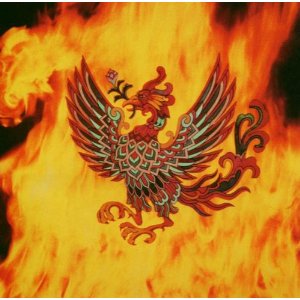
Grand Funk Railroad, Phoenix

January 11th, 2012

Artist: Grand Funk Railroad
Title: Phoenix
Label: Capitol 11099
Purchased: January 9th, Cheapo Records, St. Paul, MN
Price: $3.60
Condition: Fine

The title Phoenix represents the band’s break with former manager, Terry Knight after a long year of litigation. It’s also the first LP that was self-produced. Although there is no mention of it on the cover or on the record, this is the last album where the band was known as Grand Funk Railroad. All future releases they would just be Grand Funk.

Bridging the past with the present, “Flight of the Phoenix” open their seventh album, riffing on their Top 40 hit, “Footstompin’ Music.” Craig Frost, listed as a guest on this album (but would later become a full-time member), pumps his keyboard, driving this boogie-rock number. About three-fourth the way through the song, what’s that? A fiddle? To my knowledge, neither Mark, Don, nor Mel was adept at the violin. It totally threw me off my boogie.

It’s not that it was uncommon at the time. Fiddler Papa John Creach, played with Jefferson Airplane / Starship as well as Hot Tuna. Don “Sugarcane” Harris performed with Zappa’s Mothers of Invention and the Pure Food & Drug Act. So if your funk is to be so grand, I can see augmenting your trio with Craig Frost’s keyboards, but a fiddle player? In one of the weirdest guest appearances, Doug Kershaw bows the strings to the boogie. The Louisiana Man showed them the Cajun Way and then went back off to the swamp, never to appear on another track on Phoenix.

“Trying To Get Away” and “Someone” are typical early heavy-rock fare, plodding along with a few tempo changes, something to ponder over a few tokes. “She Got to Move Me” provides a bit more energy with drummer Don Brewer adding spot harmonies to Mark Farner’s lead vocals. Both “Move Me,” and the closing track of side one, “Rain Keeps Fallin’” set the mood of a post-Woodstock hippie life, but the images conjured up in my head are trashy.

Side two opens with the socially aware “I Just Gotta Know,” with Farner providing a voice to the generation, “Hey people are you ready to get into the streets and be your own police?” This anti-war song never reached anthem status and was probably minimal fodder on underground FM stations back in ’72.

The album hits its lowest among lows with “So You Won’t Have To Die.” According to the lyrics, Farner claims that Jesus talked to him, telling him to write this song about the problem of overpopulation.

He said overpopulation is the problem of today.
There’s too many children on the earth, and more on the way.
If you don’t start some birth control, then you won’t last too much longer.
It’s best that we let it save our souls, so we can get much stronger.
Get much stronger.

…And get laid more often without worrying about paternity suits. Shine on you shirtless rock god. There is a future for you in Christian rock

The following track, “Freedom is for Children” is over six-minutes long (“Freedom is for children / ‘Cause they don’t understand what is wrong”). If you can get beyond that opening line, there’s more schlock to follow. The album has now been tainted and I no longer hear songs without pretense. “Gotta Find Me A Better Way” isn’t a bad song, but I think I’d like it better if it were by the James Gang.

The final track, “Rock & Roll Soul” is the song I was in pursuit of when purchasing this album. It has a certain idealism of the time; it’s arena rock that isn’t overplayed like “We’re An American Band.” This song and Craig Frost’s keyboard playing throughout the LP keep it from total failure. If you must purchase a Grand Funk LP, look to the Greatest Hits package. This Phoenix is not a resurrection of a power trio, rising from the ashes of previous rock triads like Cream. It’s more like a lame duck stuck in a grand funk, and not a good funk in the Sly Stone kind of way.

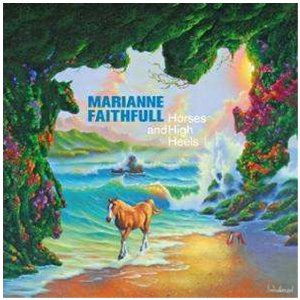
Marianne Faithfull, Horses and High Heels

November 15th, 2011

Artist: Marianne Faithfull
Title: Horses And High Heels
Label: Naïve 822861
Release Date: June 28, 2011

In a short documentary about the making of Horses and High Heels, producer Hal Willner said of Marianne Faithfull, “…This is a voice of a life. A life. A difficult life with a lot of happiness in it and a lot tragedy in it.” Willner ‘s association with Faithfull dates back to 1985 when she contributed to his project, Lost In The Stars: The Music of Kurt Weill. Her life in music before the Weill compilation is well documented; from her association with the Rolling Stones, to an attempted suicide, to failed rehabilitations, to a series of comebacks. Faithfull has walked the hard road.

She and Willner claimed this was to be her “happy” album. It was recorded in New Orleans with a rhythm section anchored by the former Meters bassist, George Porter Jr. Even with the inclusion of a cover of Joe & Ann’s, “Gee Baby,” Allen Toussaint’s “Back In Baby’s Arms” Dr. John’s piano and the Bobby Charles’ bonus track, “I Don’t Wanna Know” this is still not a New Orleans album. Willner professed it was the place to record such an album because of the wealth and depth of musical talent available.

The album is an experience. Between Faithfull’s personal drug-stained voice, the cross-hybridization of the songs, the pedigree of the musicians and songwriters, this is one of the rare projects where the sum of the contents is not lesser than the whole. Faithfull co-wrote four of the tracks. “Why Did We Have To Part” was a collaboration with French pop star, Laurent Voulzy. The song draws upon broken relationships, something that Faithfull knows of its familiarity. But because of her conversance with the topic, she delivers the song feeling regret, but yet there’s a sense of triumph when she sings in the bridge, “We are very good friends my love/ We have passed the wall of hate/But you know I’ll never come back again.”

Faithfull delivers Jackie Lomax’s “No Reason” like it was a Stones cover. Her near straight reading of Lesley Duncan’s “Love Song” comes off more ethereal with Carol Winton’s lap steel hanging in the air, like a soundtrack to a dream sequence.

What was once a teen opera – Jerry Leiber, Artie Butler and Shadow Morton’s “Past Present & Future” – now sounds like a trip through an adult psychosis. Faithfull has that flair for German theatre music so this rendition comes across like Bertolt Brecht meets the Shangri-La’s while confessing to Dr. Freud. “A (woman) should not strive to eliminate (her) complexes, but to get in accord with them: they are legitimately what direct (her) conduct in the world,” so Sigmund said. And it does apply on Horse and High Heels.

Toussaint’s “Back In Baby’s Arms” comes off like it was lifted from Joe Cocker’s Mad Dogs & Englishmen tour. Like Cocker in his prime, Faithfull is a great interpreter. She’s a squatter, claiming what she lands on and taking ownership.

In 1987, working with Willner, they recorded the album, Strange Weather which featured a cove of “As Tears Go By.” In a Vogue magazine interview Faithfull commented on the song, “Forty is the age to sing it, not seventeen.” In 2011, teetering on the age of 65, Faithfull interpreted Carole Kings, “Goin’ Back,” a reflective song made most famous by Dusty Springfield. It is also a song of resolution. At 65, maybe this is the time for Marianne Faithfull to sing it. “But thinking young and growing older is no sin / And I can play the game of life to win.”